High-integrity diagnostic scanners, battery evaluators, and automotive validation equipment engineered to meet international safety and performance criteria.
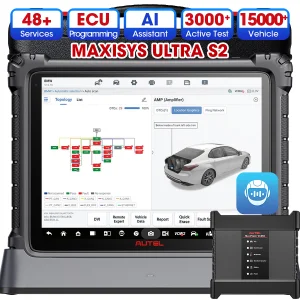
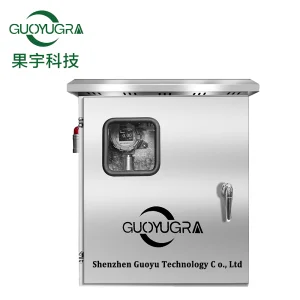
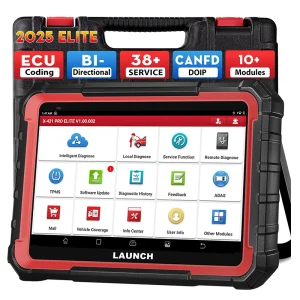
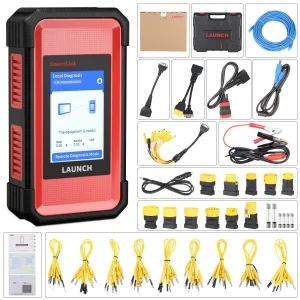
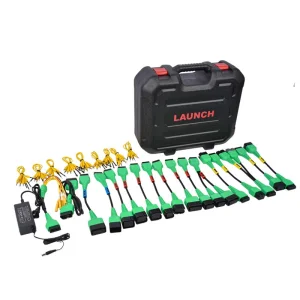
The paradigm shift toward Software-Defined Vehicles (SDVs) and high-voltage powertrain systems demands a new class of diagnostics and end-of-line verification equipment.
The transition from traditional Internal Combustion Engines (ICE) to hybrid and pure battery electric vehicles (BEVs) has redefined automotive assembly lines. Validation test benches are no longer simple mechanical dynos; they are complex Hardware-in-the-Loop (HIL) ecosystems. Global manufacturers require high-precision power loop testing platforms, dynamic cycle life simulators, and dual-channel charge/discharge systems. This transformation ensures component safety, optimizes energy pathways, and complies with evolving international automotive safety regulations.
Modern vehicles integrate decentralized Electronic Control Unit (ECU) topologies into high-performance centralized computing platforms. Communication networks have advanced from legacy CAN standards to High-Speed CAN-FD and Automotive Ethernet (DoIP). Testing these interfaces requires diagnostic equipment capable of processing multiple gigabytes of real-time sensor streams, ensuring zero latency in actuator commands, and providing reliable flash programming protocols for automotive control nodes.
Understanding how advanced workshop instruments integrate into localized manufacturing nodes, fleet hubs, and independent service repair networks.
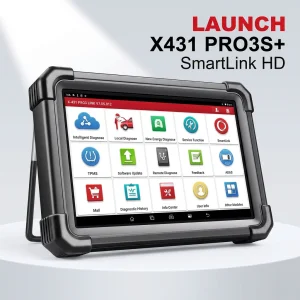
In mature markets like Europe and North America, independent repair operations require tools with OEM-level capabilities. Shenzhen Manata Scanner designs and manufactures systems like the Launch X431 Pro Elite and Autel Ultra S2, ensuring workshops can access CAN-FD, DoIP, and secure gateway gateways (like FCA AutoAuth). This setup minimizes dependencies on proprietary dealership networks and reduces diagnostic turnaround times.
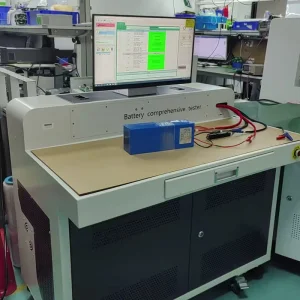
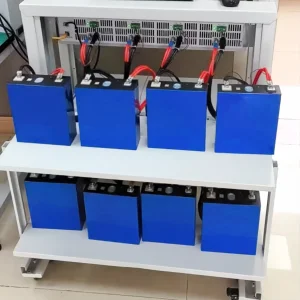
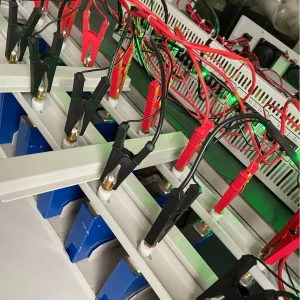
New energy vehicle battery packs require strict capacity sorting and cyclic life-span evaluation during production and recycling stages. High-precision test benches, such as our 5V100A BTS and 84V 10A 60A comprehensive testers, measure internal resistance, track Coulombic efficiency, and run charge/discharge profiles. These steps prevent thermal runaway events and maximize battery cell utilization.
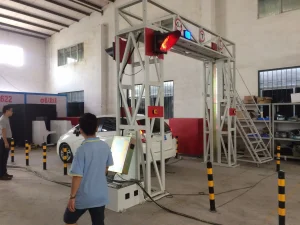
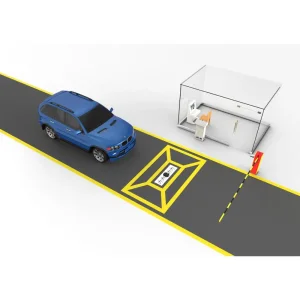
Before vehicles roll off production lines, specialized safety systems inspect their sub-assemblies. Manata Scanner supplies heavy-duty security scanners (Safeway X-ray Cargo systems) and under-vehicle inspection setups. These tools conduct structural validation, check logistics safety, and detect physical anomalies inside complex multi-layered heavy vehicles.
Deep-dive technical methodologies defining next-generation diagnostic test benches, high-voltage sensor testing, and cloud-to-hardware simulation interfaces.
Future test benches require precise dynamic emulation of battery states, drive profiles, and vehicle communication loads. Our platform roadmap integrates real-time mathematical models of battery chemistry and electric motor drives. This architecture allows developers and quality assurance engineers to simulate extreme operating conditions (such as fast charging at sub-zero temperatures) in a secure laboratory setting, preventing damage to physical components.
With diagnostic capabilities moving closer to Edge nodes, modern workshop instruments must process multiple protocol stacks simultaneously. Our upcoming devices leverage multi-core processing architectures that handle classic OBD-II, CAN-FD, DoIP, and SAE J2534 passthru protocols at the hardware level. This ensures smooth operations during high-bandwidth tasks like multi-system ECU re-flashing and real-time ADAS sensor calibration.
High-power battery charge and discharge cycles generate significant thermal loads and consume large amounts of electricity. Our upcoming BTS test benches feature advanced active-inverter energy recovery systems. Energy drawn from battery packs during discharge cycles is returned to the grid with over 92% efficiency. This system reduces factory heat outputs and lowers overhead costs for testing facilities.
Diagnostic equipment is evolving beyond localized, on-device databases. By connecting edge hardware to cloud-based diagnostic platforms, operators can access real-time repair databases and run AI-powered anomaly detection on complex fault patterns. Remote diagnostic protocols (like Launch SmartLink C2.0) enable off-site master technicians to interface with vehicles globally, improving fix rates and shortening workshop cycle times.
Discover how our specialized testing equipment resolves workflow issues across different application environments worldwide.
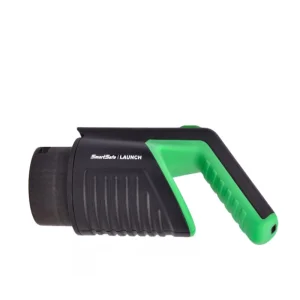
A battery repair and recycling facility in North America implemented our 84V 10A 60A Battery Pack Comprehensive Testers alongside the ISmart EV FC01 Battery Gun. The facility needed to sort incoming lithium iron phosphate (LFP) cells by capacity and internal resistance. By utilizing our multi-channel test profiles, they achieved a cell sorting throughput of 500 units per shift. This system streamlined pack rebuilds and ensured balanced performance within multi-cell battery arrays.
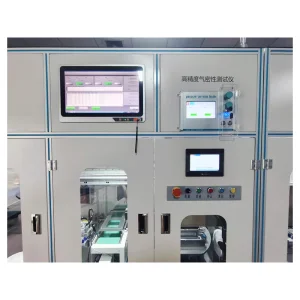
An automotive wiring harness manufacturer faced high warranty costs due to micro-fissures in high-voltage Fakra and ECU connectors. Integrating our Automatic Air Leak Testing Equipment with differential pressure sensors into the end-of-line quality loop helped the company identify leaks as small as 0.05 cc/min. This system prevented water ingress issues, reduced safety-critical component failures, and improved assembly yields.
A trusted engineering partner delivering diagnostics, ECU programming systems, and testing equipment to global markets.
Shenzhen Manata Scanner Co., Ltd. is a leading China automotive diagnostic equipment manufacturer specializing in advanced vehicle inspection systems and ECU diagnostic solutions for the global automotive aftermarket. With a strong commitment to innovation, quality, and intelligent vehicle servicing, Manata Scanner delivers reliable diagnostic technologies designed to improve maintenance efficiency, reduce downtime, and support modern workshop operations.
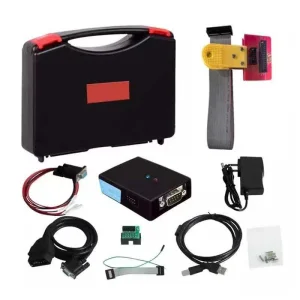
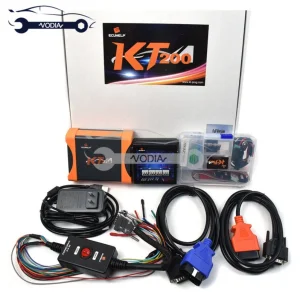
The company offers a comprehensive portfolio of automotive diagnostic equipment, including vehicle inspection systems, ECU programming and coding tools, automotive scan tools, ADAS calibration equipment, EV battery diagnostic systems, TPMS diagnostic devices, and intelligent fleet diagnostic solutions. These products are widely used by automotive repair workshops, vehicle inspection centers, dealerships, fleet operators, and maintenance service providers worldwide.
Driven by continuous technological innovation, Shenzhen Manata Scanner Co., Ltd. integrates artificial intelligence, cloud connectivity, big data analysis, and advanced electronic testing technologies into its product development process. The company's R&D team focuses on creating intelligent, accurate, and user-friendly diagnostic solutions capable of meeting the evolving requirements of both conventional and new energy vehicles.
Quality is at the core of Manata Scanner's manufacturing philosophy. The company implements strict quality management procedures throughout design, production, testing, and final inspection to ensure stable performance and long-term reliability. Its products are engineered to comply with international standards and are exported to customers across Europe, North America, South America, Southeast Asia, the Middle East, and other global markets.
Committed to becoming a trusted global partner in automotive diagnostics, Shenzhen Manata Scanner Co., Ltd. continues to provide innovative products, professional technical support, and customized solutions that help customers enhance service capabilities and operational efficiency.
Expert responses to common technical questions regarding advanced vehicle diagnostic networks, battery pack grading, and automotive testing standards.
CAN-FD (Controller Area Network Flexible Data-Rate) extends the payload from 8 bytes to 64 bytes and increases the bit rate up to 5 Mbps or higher, ensuring real-time diagnostic performance for modern vehicle subsystems. DoIP (Diagnostic over IP) uses Ethernet connections to transfer data at rates up to 100 Mbps. This speed is critical for reprogramming extensive memory blocks on complex ECUs and updating high-density vehicle software packages.
The BTS 5V100A battery test bench runs automated charge and discharge schedules (constant current, constant voltage, and constant power modes) over thousands of cycles. Its high-resolution system measures changes in voltage, current, temperature, and internal resistance. These metrics are used to calculate the capacity retention curve, identify battery cell degradation trends, and determine the cell's suitability for automotive applications or second-life usage.
Differential pressure sensors compare the pressure drop between a reference volume and the test part. This method is highly sensitive, detecting micro-leaks down to the pascal scale. For automotive connectors (such as ECU housings and Fakra ports), locating these leaks is critical to preventing moisture intrusion, which can lead to corrosion, electrical shorts, or system failures.
Under-vehicle surveillance systems and X-ray cargo scanners allow operators to inspect vehicle chassis and cargo holds for structural damage, unauthorized modifications, or hidden contraband without manual disassembly. These automated scanning solutions are essential for security checks and maintenance inspections in high-throughput fleet hubs, customs borders, and secure facilities.
High-precision tools for ECU flashing, lithium cell cycle analysis, chassis monitoring, and leak testing applications.
 Manata Scanner