Decoding the global EV/HEV market shift and the critical infrastructure role of high-precision battery diagnostics.
The global transition to sustainable mobility has placed hybrid and electric vehicle (NEV) testing systems at the heart of automotive industrial manufacturing, post-market diagnostics, and battery recycling loops. Hybrid vehicles (HEVs) and Plug-in Hybrid Electric Vehicles (PHEVs) run on highly sophisticated, dual-powertrain configurations where the high-voltage battery operates under dynamic cycling patterns. Unlike battery electric vehicles (BEVs) that undergo prolonged discharge phases, hybrid vehicle batteries endure frequent, high-current micro-cycles of charging and discharging through regenerative braking and engine assistance. Consequently, evaluating internal resistance, capacity degradation, state-of-health (SOH), and thermal performance requires specialized Hybrid Battery Test Equipment.
Across key industrial markets in North America, Europe, and Asia-Pacific, testing infrastructure is undergoing rapid technological updates. Heavy regulatory mandates, such as the EU Battery Passport scheme and strict safety rules for end-of-life battery disposal, have made exact, traceable battery testing a standard practice for automotive OEMs, tier-1 suppliers, and independent workshops. System integrators and commercial fleet operators now require multi-functional diagnostic units capable of determining battery life metrics rapidly, preventing thermal runaway, and identifying cell balancing defects before pack assembly or vehicle deployment.
Core Industry Insight: High-precision diagnostic systems act as the primary buffer between active battery modules and safety failures. Real-time monitoring of DC Internal Resistance (DCIR), electrochemical stability, and CAN bus sensor accuracy minimizes catastrophic degradation risks and helps project accurate long-term residual value for electric vehicle fleets.
Automated charge-discharge cycles to evaluate absolute amp-hour capability, vital for classifying cell health during repair and second-life assembly.
Direct current internal resistance measurement techniques to pinpoint localized cell deterioration and micro-short circuits.
Real-time monitoring of individual module voltages to restore capacity balance across series-connected cell stacks efficiently.
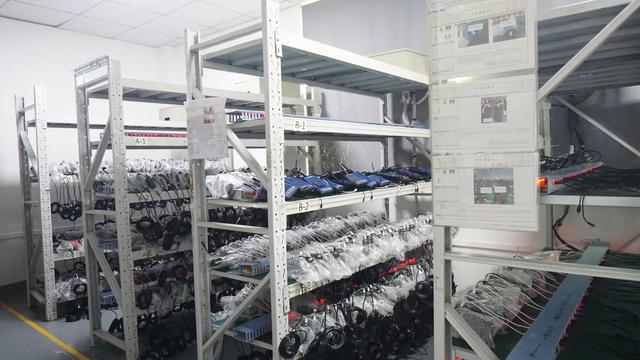
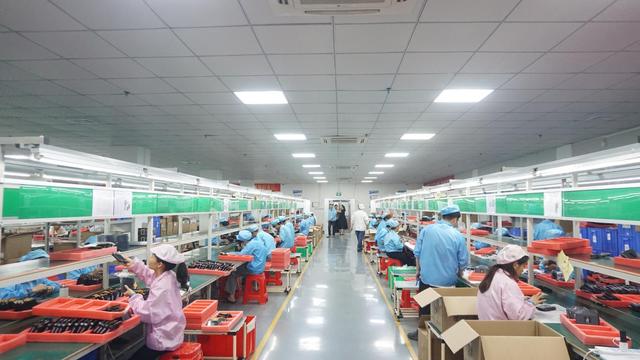
As the epicenter of the global lithium-ion battery supply chain, China provides unique structural and logistical advantages for the production of advanced testing equipment. Shenzhen Manata Scanner Co., Ltd. leverages these dynamic localized ecosystems to combine rapid product design cycles with high component integration. Through our vertically integrated manufacturing networks, we offer custom-engineered testing solutions that match the precise technical standards of overseas markets at optimal capital efficiency.
China's industrial efficiency in this sector stems from the proximity of structural components, semiconductor supply channels, and software calibration suites. Whether engineering customized multi-channel cycle testing devices or specialized balancing systems, our assembly protocols benefit from real-time supply chain feedback, shortening typical design and delivery cycles by up to 40% compared to Western manufacturers. Furthermore, strict compliance with global testing protocols (including CE, FCC, UL, and RoHS standards) guarantees that our OEM/ODM systems operate safely and reliably under demanding laboratory and workshop conditions.
When procurement managers, industrial plant operators, and workshop chains seek reliable test equipment suppliers, they focus on three key operational markers: system flexibility, long-term calibration stability, and technical support access. Standardized, rigid equipment often fails to adapt to new battery chemistries, such as Lithium Iron Phosphate (LFP), Nickel Manganese Cobalt (NMC), or the emerging Sodium-ion variations. OEM/ODM partnerships address this by offering custom software updates, adjustable load profiles, and expandable diagnostic channels to protect your infrastructure investment from obsolescence.
Modern battery diagnostic solutions are not confined only to R&D laboratories; they are deployed across diverse practical commercial and service environments:
We are witnessing a major shift toward AI-driven predictive diagnostic models and cloud-connected battery digital twins. Instead of looking at simple static voltage readings, next-generation systems analyze historical cycle dynamics using cloud platforms. This permits automated prediction of potential thermal runaways, micro-cracks in separator membranes, and dendritic growth issues, allowing workshops to take preventive action long before hardware errors appear on the dashboard.
To ensure high quality, modern battery testing equipment must be built with structural isolation, accurate sensors, and high-frequency communication links. A typical system layout includes:
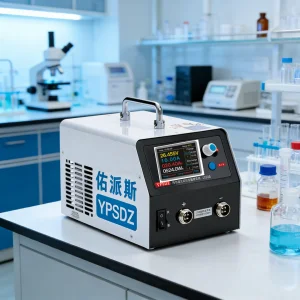
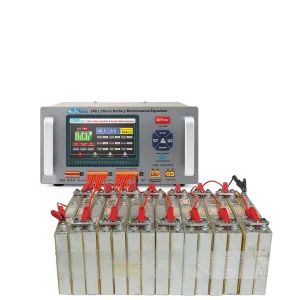
This technical foundation ensures that when using tools like the YPSDZ-3010 Auto Cycle Capacity Tester or our custom 2-24S Lithium Battery Balancing Machines, operators receive repeatable, lab-grade diagnostic reports that are directly applicable to commercial repair workflows.
Answers to critical questions on hybrid battery diagnostics, industrial procurement, and system integration.
HEV batteries operate in a narrow State of Charge (SOC) band (typically 40%–80%) but undergo rapid, high-power cycling. Diagnosing HEVs requires precise internal resistance and rapid transient response testing. In contrast, BEV diagnostics focus on total capacity, sustained high-output thermal management, and prolonged discharge curves.
In series-connected battery modules, the overall pack capacity is restricted by the weakest cell. If cell voltages drift, the battery management system (BMS) limits charging or discharging early. Active balancing redistributes energy across the cells to recover capacity and prevent cell degradation.
We implement multi-stage calibration protocols using high-precision reference instruments. Our units undergo stress testing in simulated thermal environments to confirm stable measurement readings, consistent communication performance, and reliable safety cutoff mechanisms under continuous operation.
We offer extensive hardware customization, including adjustable voltage and current ranges, variable channel counts, and custom wiring interfaces. On the software side, we support custom database structures, specialized analytical reporting modules, and tailored user interfaces to align with your diagnostic workflows.
Shenzhen Manata Scanner Co., Ltd. is a leading China automotive diagnostic equipment manufacturer specializing in advanced vehicle inspection systems and ECU diagnostic solutions for the global automotive aftermarket. With a strong commitment to innovation, quality, and intelligent vehicle servicing, Manata Scanner delivers reliable diagnostic technologies designed to improve maintenance efficiency, reduce downtime, and support modern workshop operations.
The company offers a comprehensive portfolio of automotive diagnostic equipment, including vehicle inspection systems, ECU programming and coding tools, automotive scan tools, ADAS calibration equipment, EV battery diagnostic systems, TPMS diagnostic devices, and intelligent fleet diagnostic solutions. These products are widely used by automotive repair workshops, vehicle inspection centers, dealerships, fleet operators, and maintenance service providers worldwide.
Driven by continuous technological innovation, Shenzhen Manata Scanner Co., Ltd. integrates artificial intelligence, cloud connectivity, big data analysis, and advanced electronic testing technologies into its product development process. The company's R&D team focuses on creating intelligent, accurate, and user-friendly diagnostic solutions capable of meeting the evolving requirements of both conventional and new energy vehicles.
Quality is at the core of Manata Scanner's manufacturing philosophy. The company implements strict quality management procedures throughout design, production, testing, and final inspection to ensure stable performance and long-term reliability. Its products are engineered to comply with international standards and are exported to customers across Europe, North America, South America, Southeast Asia, the Middle East, and other global markets.
Committed to becoming a trusted global partner in automotive diagnostics, Shenzhen Manata Scanner Co., Ltd. continues to provide innovative products, professional technical support, and customized solutions that help customers enhance service capabilities and operational efficiency.


 Manata Scanner