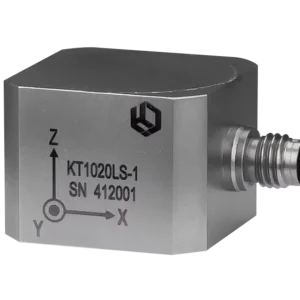
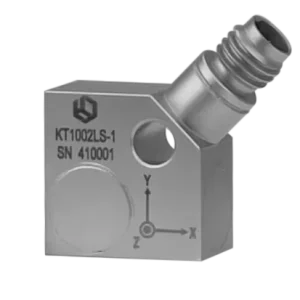
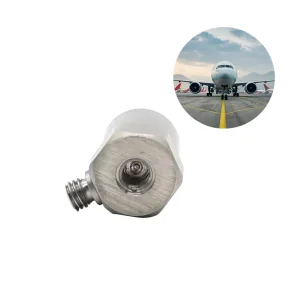
Stainless Steel Waterproof Single Axial Testing Field Accelerometer Vibration Acceleration Sensor

Product Description

Stainless Steel Waterproof Single Axial Testing Field Accelerometer Vibration Acceleration Sensor
Product Description
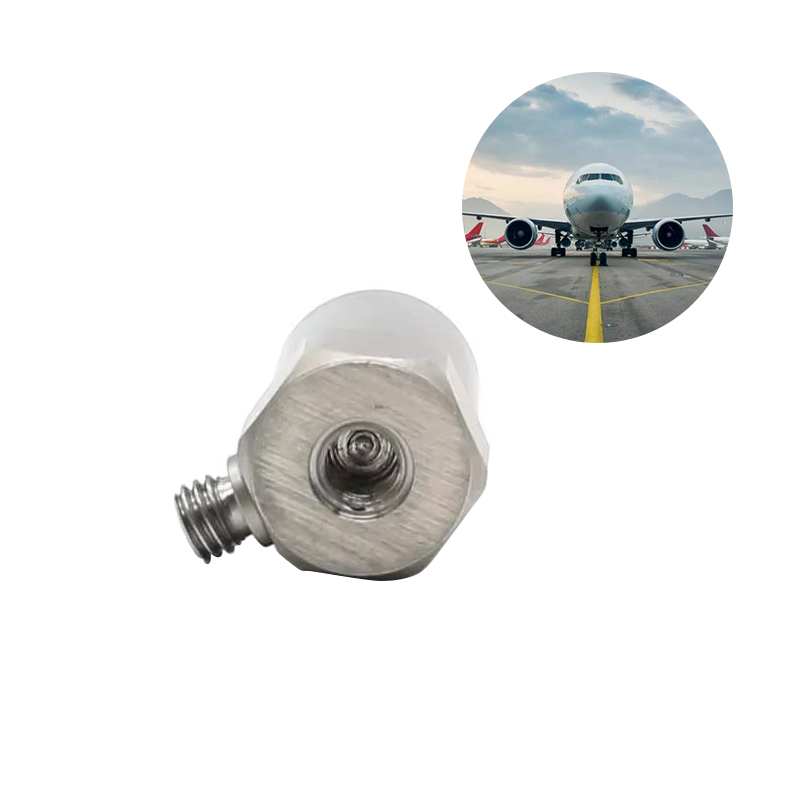
Vibration Acceleration Sensor Product View 1
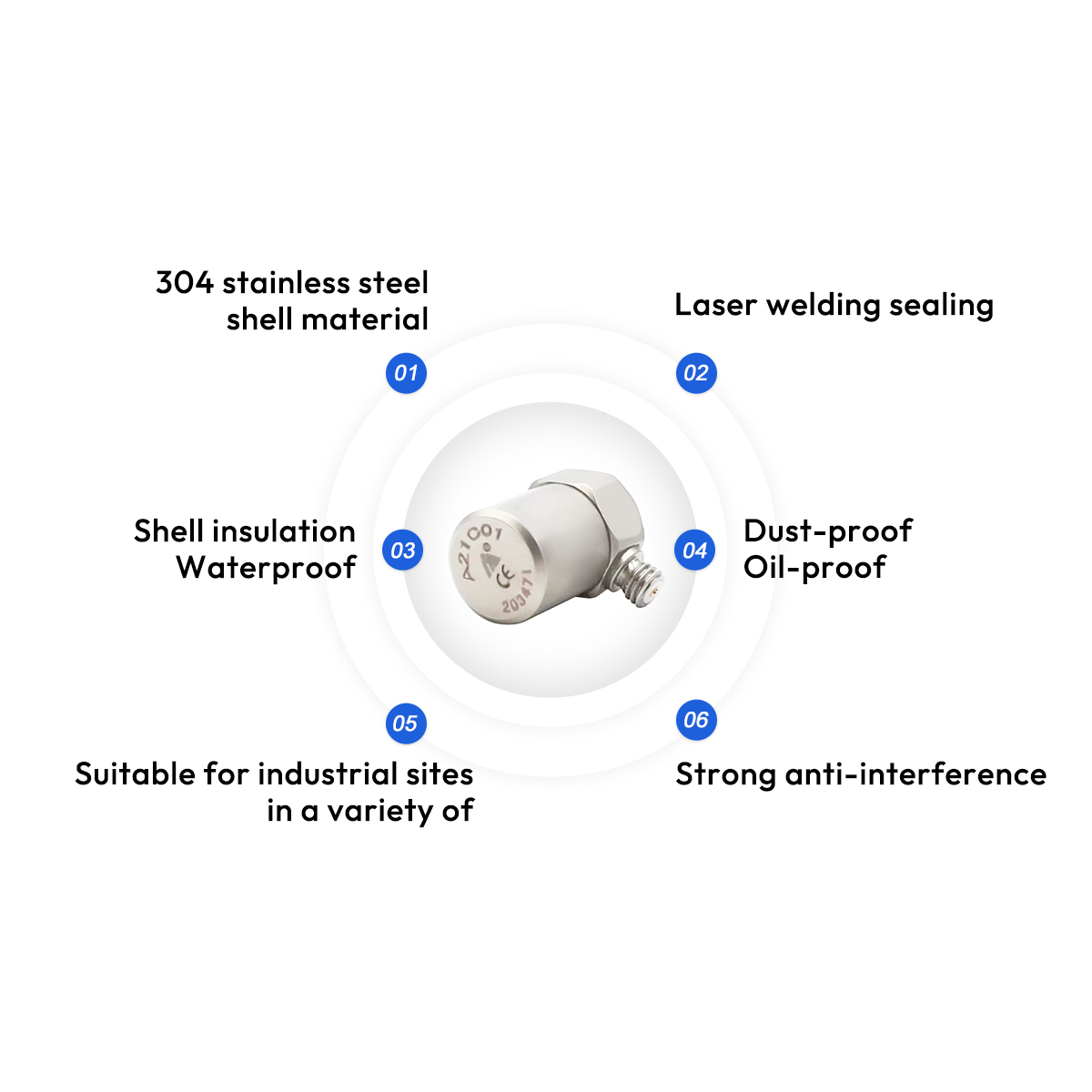
Vibration Acceleration Sensor Product View 2
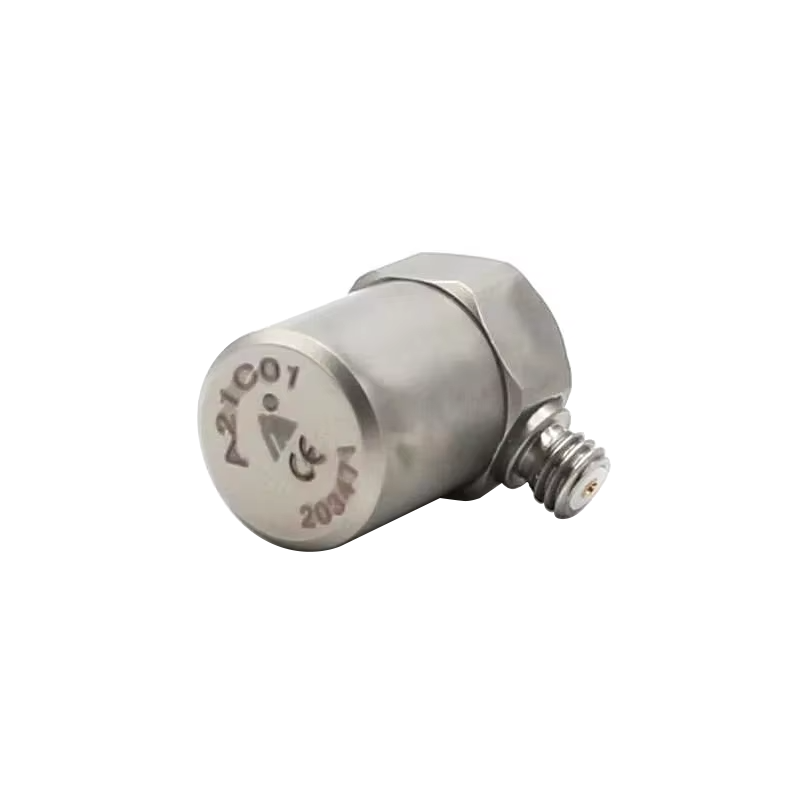
Vibration Acceleration Sensor Product View 3
Characterization Unit (Selectable) A21C01 A21C05 A21C10 A21C20 A21C50 A21C100 A21C200 A21C500
Measurement Range (peak) g ±5000 ±1000 ±500 ±250 ±100 ±50 ±25 ±10
Sensitivity (25°C)±5% mV/g 1 5 10 20 50 100 200 500
Frequency range(±1dB) Hz 1-12K 1-12K 1-10K 1-10K 0.5-8K 0.5-8K 0.5-5K 0.5-3K
Resonant Frequency Hz ≥45K ≥45K ≥40K ≥40K ≥30K ≥30K ≥15K ≥10K
Noise µV <50 <50 <50 <50 <50 <50 <80 <80
Measurement Range (peak) g ±6000 ±5000 ±3000 ±3000 ±3000 ±3000 ±1000 ±1000
Overall Dimension mm φ12*15 φ12*15 φ12*15 φ12*15 φ12*17 φ12*17 φ18*26 φ18*26
Weight g ~9.5 ~9.5 ~9.5 ~9.5 ~13 ~13 ~46 ~46
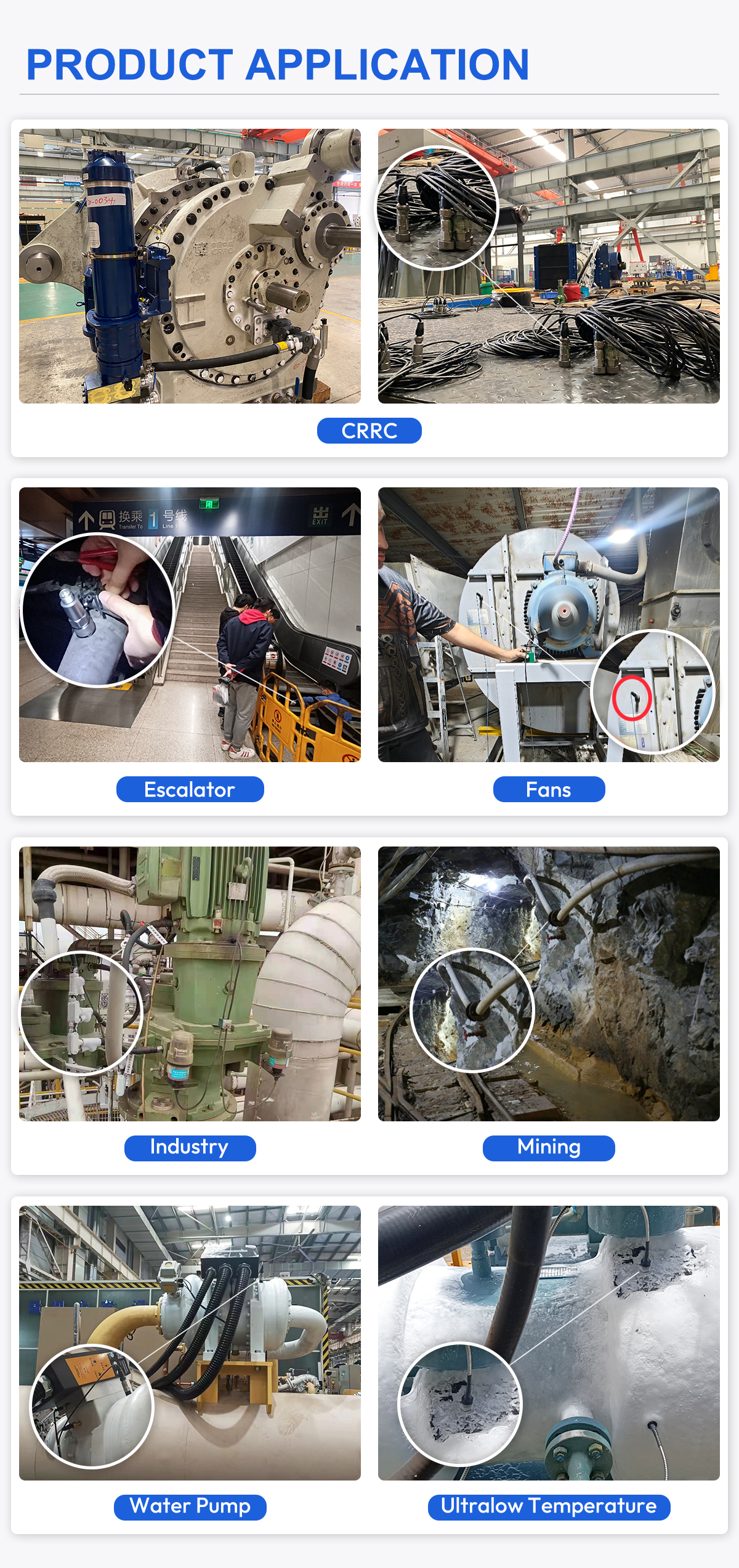
Product Application
Vibration Sensor Application Setup 1
Vibration Sensor Application Setup 2
Vibration Sensor Application Setup 3
Vibration Sensor Application Setup 4
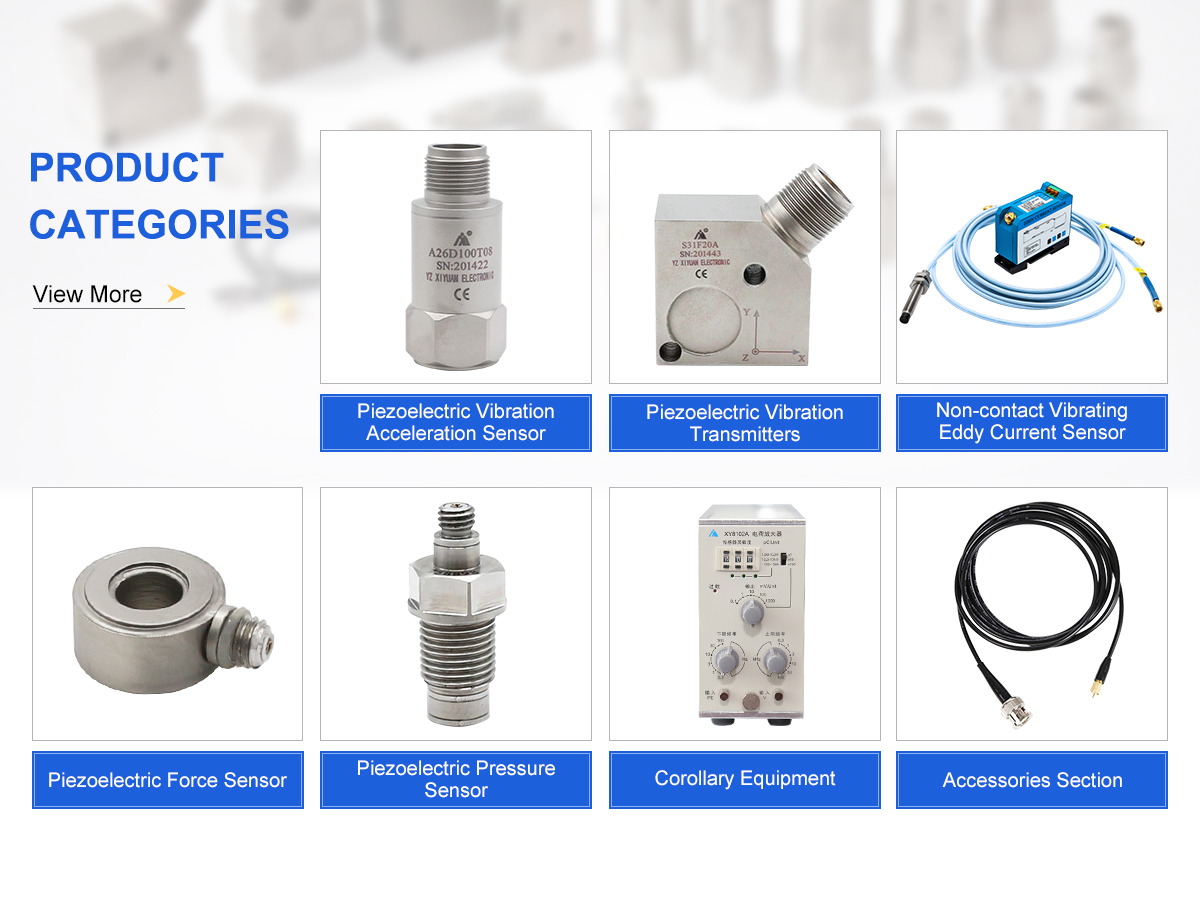
Product Categories
Product Categories Overview
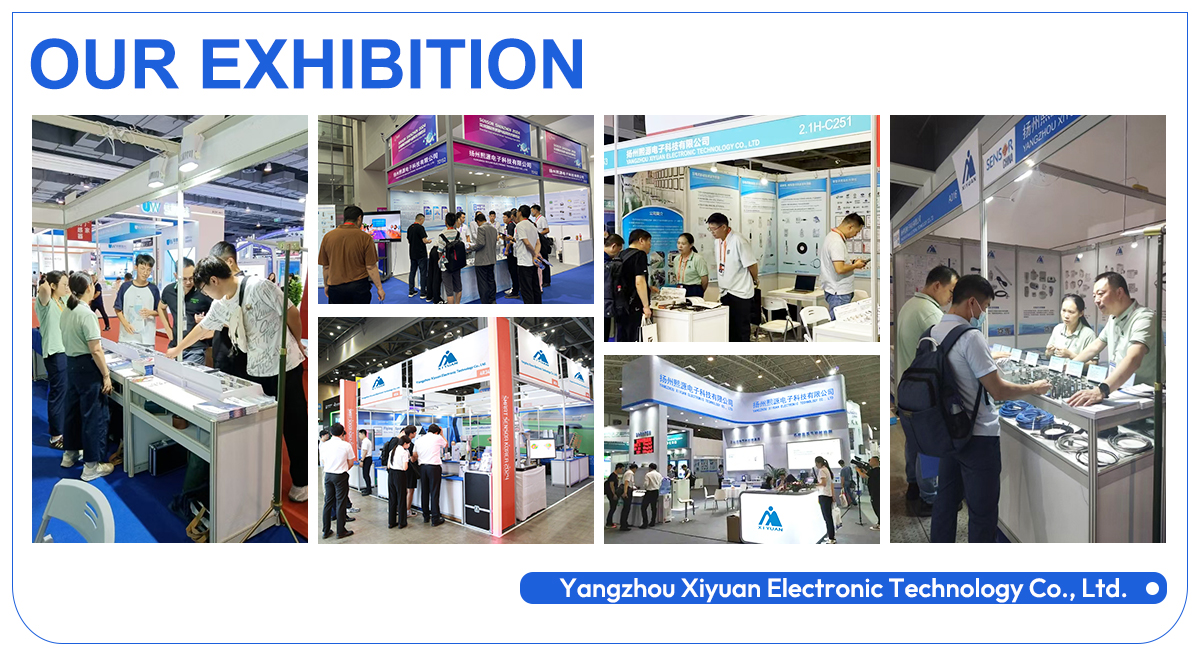
Company Profile
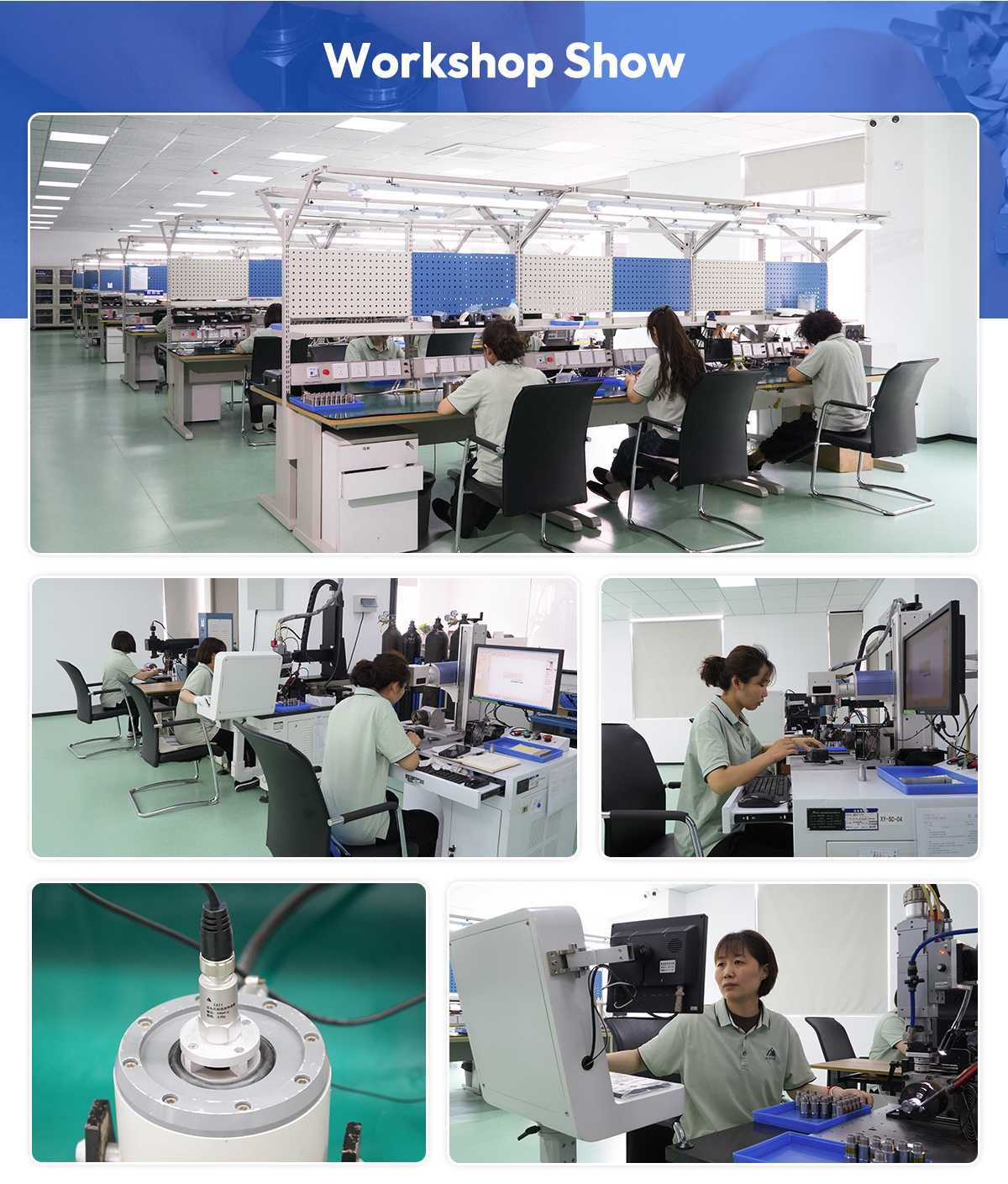
Manufacturing Area
Quality Testing Office
Technical Engineering Laboratory
Warehouse Storage
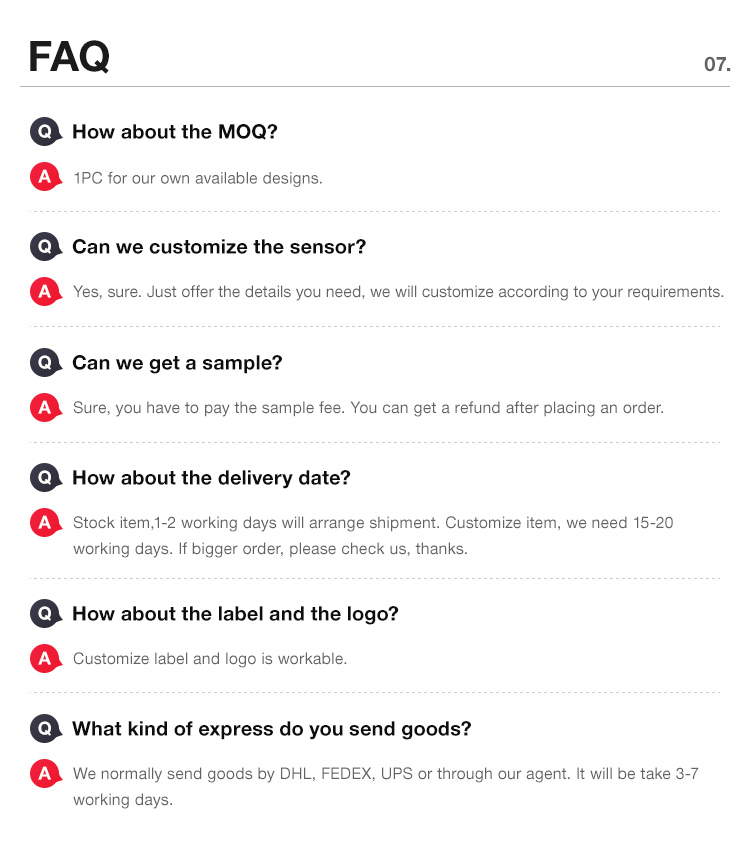
Frequently Asked Questions
Testing Procedures
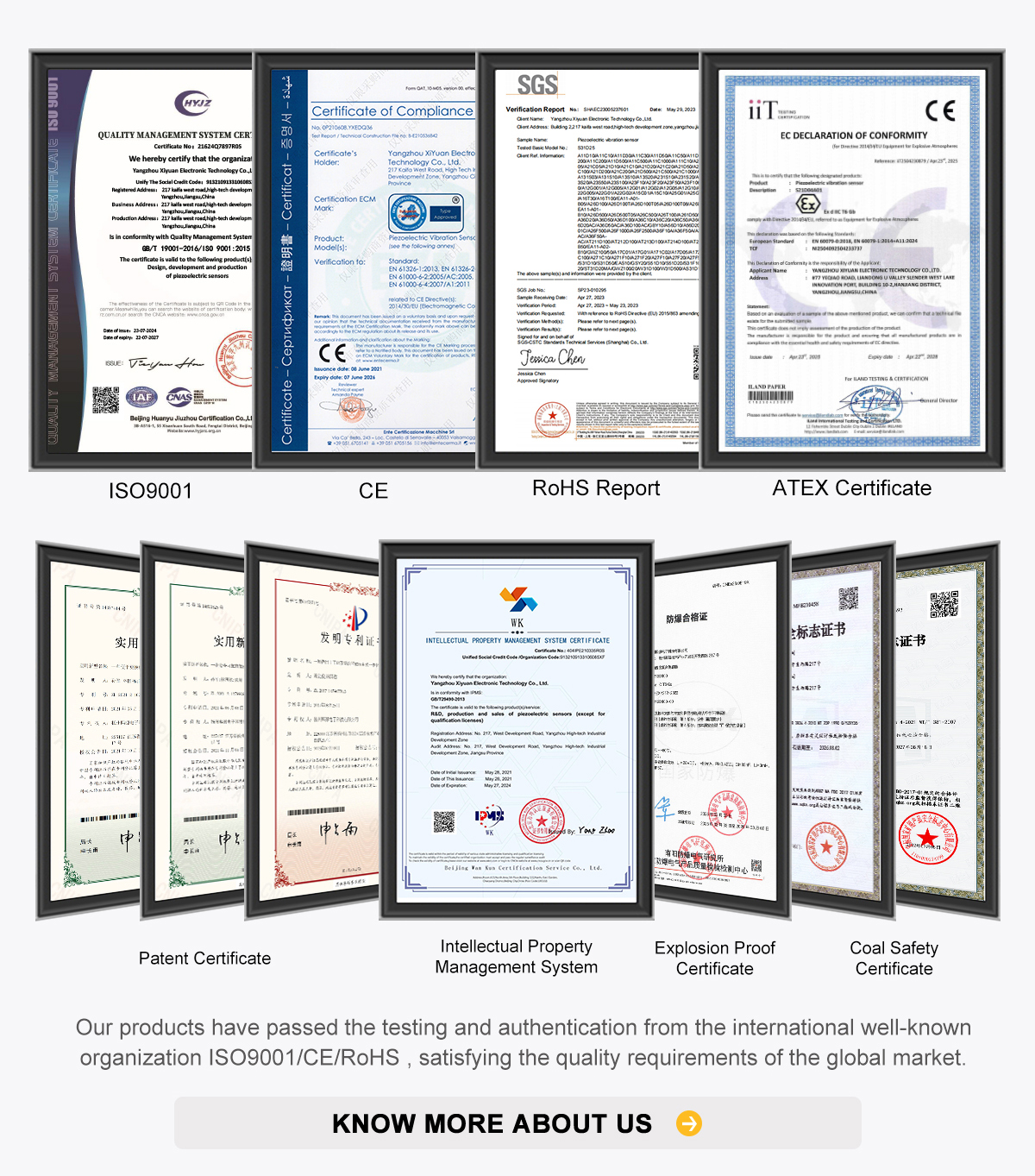
Calibration Standard Certificate
Q1: What are the primary applications of this waterproof accelerometer?
A1: This single-axial accelerometer is designed for vibration monitoring in harsh outdoor environments, testing fields, geological monitoring, industrial machine tracking, and structural health testing under wet or underwater conditions.
Q2: Why is stainless steel used for the sensor housing?
A2: Stainless steel provides excellent corrosion resistance, high structural strength, and reliable durability. This material choice protects internal delicate components against high-impact forces, chemicals, and fluid entry.
Q3: How do I select the right measurement range (e.g., A21C01 vs. A21C500)?
A3: The selection depends on the expected vibration intensity. Models like A21C01 support higher peak acceleration limits (up to ±5000g) with lower sensitivity (1 mV/g) for high-impact shock testing. Models like A21C500 offer higher sensitivity (500 mV/g) for micro-vibration measurements with a smaller range (±10g).
Q4: Does the sensor require calibration before shipping?
A4: Yes. Every single axial accelerometer is rigorously tested and calibrated in our quality control lab prior to shipment, ensuring precise measurement tolerance, frequency response, and accurate sensitivity tracking.
Q5: Can these sensors operate reliably at high frequencies?
A5: Yes, different models offer varying frequency ranges. High-frequency models can measure up to 12 kHz with a resonant frequency equal to or greater than 45 kHz, guaranteeing highly reliable high-speed dynamic signal capturing.
Q6: What is the benefit of a single axial sensor over a triaxial one?
A6: Single axial sensors focus measurement along one specific targeted direction. They are generally more cost-efficient, compact, and easier to mount in narrow spaces where multi-directional analysis is unnecessary.

Related Products