2026 Top Guide How to Diagnose EV Battery Problems?

Time:2026-09-19 Author:Sienna
0%

Electric vehicles are entering a more demanding ownership era. The International Energy Agency’s Global EV Outlook 2025 reports that global electric car sales exceeded 17 million in 2024. EV battery demand also surpassed 950 GWh, increasing the need for accurate health checks. A warning remains. Dashboard range alone cannot reveal every battery problem.

This guide explains how to diagnose EV battery problems through practical evidence, not guesswork. Technicians should compare battery state of health, usable capacity, cell voltage balance, charging speed, temperature behavior, and diagnostic trouble codes. A scan tool may show a weak module, while a controlled road test reveals sudden power reduction. Physical clues matter too. Look for coolant leaks, unusual heat, swelling, corrosion, or repeated charging interruptions. These details can separate normal aging from a potentially serious fault.

Battery researcher Dr. Jeff Dahn has emphasized, “The battery is the single most important component in an electric vehicle.” That principle makes disciplined diagnosis essential. The U.S. Department of Energy’s Argonne National Laboratory also highlights battery degradation as a central factor affecting EV range, reliability, and resale value. BloombergNEF’s Electric Vehicle Outlook further shows that battery costs and chemistry continue changing across the market. Therefore, one test cannot fit every vehicle. Some assumptions will be wrong. That is worth admitting. This 2026 guide combines manufacturer data, professional inspection methods, real-world driving symptoms, and safety-focused decision points. It aims to help owners, workshops, and fleet managers identify what the battery is actually doing before replacing expensive parts.
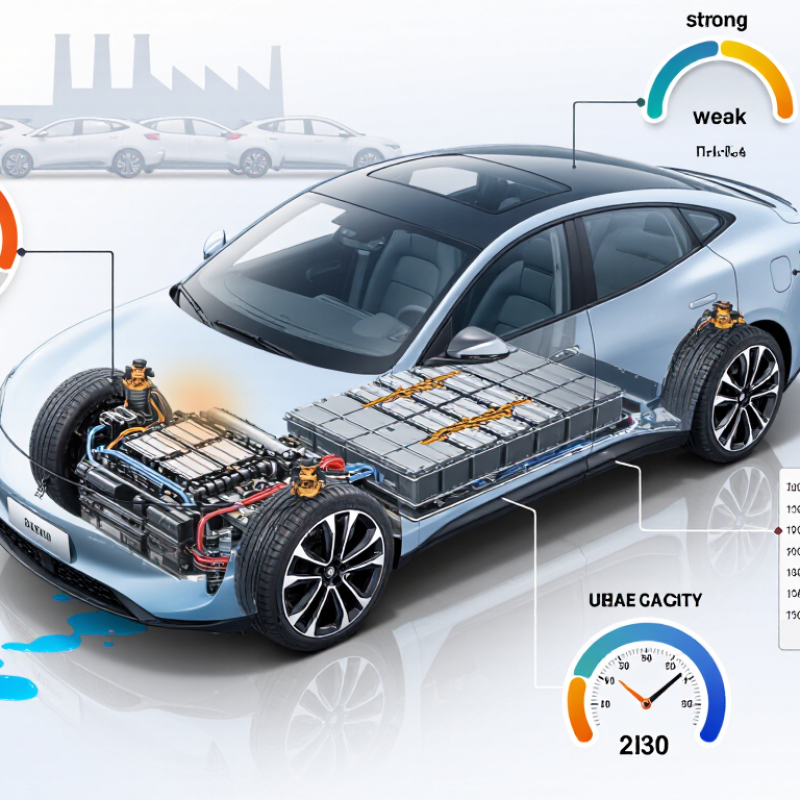
2026 Top Guide How to Diagnose EV Battery Problems?

What EV Battery Problems Are and Why They Matter

What EV Battery Problems Are and Why They Matter

An EV battery problem is rarely just “low capacity.” It may involve cell imbalance, thermal stress, charging faults, insulation loss, or software errors. These issues matter because the battery controls driving range, charging speed, safety, and resale value. The International Energy Agency reported that electric car sales exceeded 14 million globally in 2023, creating a larger population requiring reliable battery diagnosis. IEA, Global EV Outlook 2024.

Battery symptoms can appear in ordinary moments. The range drops sharply after a cold night. Charging stops at seventy percent. The dashboard shows a warning after rapid charging. A skilled technician should compare state of charge, battery temperature, voltage differences, charging history, and fault codes. One reading is not enough. A weak cell may look normal when the pack is cool, then lose voltage under load. The U.S. Department of Energy notes that temperature strongly affects lithium-ion battery performance and aging.

Age alone does not prove failure. A 2024 national laboratory review also emphasizes that climate, charging behavior, and usage conditions influence battery life. Frequent high-power charging may increase stress, but the effect differs between vehicles and climates. This is where diagnosis becomes imperfect. Software estimates can be wrong, and a battery health percentage is not a complete medical report. Careful testing, documented conditions, and repeat measurements provide more dependable evidence.

How to Recognize Common Signs of EV Battery Failure

2026 Top Guide: How to Diagnose EV Battery Problems?

An EV battery rarely fails without warning. A sudden range drop is one common sign. For example, a car showing 80% charge may travel only half its usual distance. Compare several trips, not one cold morning. Low temperatures, tire pressure, heavy loads, and heating can also reduce range. That distinction matters.

Charging problems deserve attention. The vehicle may stop charging early, charge unusually slowly, or show different percentages after repeated attempts. A battery warning light, reduced-power message, or unexpected shutdown needs prompt inspection. Unusual heat, a chemical smell, smoke, or a swollen battery case is more serious. Stop driving when safe, leave the vehicle away from buildings, and contact qualified emergency support. Never open the battery pack yourself.

Tips: Record the date, outside temperature, mileage, charge level, and charging time. Check tire pressure and charging equipment first. Then request a professional battery health test, including cell balance and stored fault codes. Ask for measured results, not only a verbal opinion. A diagnosis can still be uncertain when data is limited. I have seen drivers blame the battery before checking a faulty cable or software reading. Careful comparison prevents an expensive mistake.

How to Check EV Battery Health Step by Step

How to Check EV Battery Health Step by Step

Checking an EV battery starts with simple observations, not guesswork. Park the vehicle safely and record its mileage, outdoor temperature, and displayed range. Charge the battery to 100% using approved equipment, then let it rest for about thirty minutes. Note the final state of charge and estimated driving range. A cold morning or strong heating demand can reduce range temporarily, so repeat the check in similar conditions.

Drive a familiar route at steady speeds and record the energy used. Compare this result with the vehicle’s normal consumption, not only its range estimate. Sudden range loss, slow charging, or unexpected shutdowns may indicate a problem. Inspect the charging connector for heat marks, moisture, or damaged pins. Do not open the battery pack. High-voltage components require trained technicians and proper protective equipment.

For a deeper assessment, request a professional diagnostic scan. A qualified technician can review battery state of health, cell voltage differences, temperature readings, charging history, and stored fault codes. Ask for the measured values in writing. Smartphone applications can offer clues, but their readings may be incomplete or inaccurate.

My first check is never perfect. Weather, tire pressure, payload, and driving style can distort the result. Repeat the test before making an expensive decision, especially when one unusual reading causes concern.

How to Interpret Battery Diagnostic Results

Interpreting EV battery diagnostic results requires more than reading one percentage. Start with state of charge (SOC), which shows available energy now. State of health (SOH) estimates remaining capacity compared with the original pack. A 2024 fleet analysis covering more than 10,000 electric vehicles reported average battery degradation near 2.3% annually. That figure is useful, but not a verdict. Temperature, charging speed, mileage, and storage time can change the result.

Look for patterns across the report. Cell-voltage differences should remain small under similar conditions. A large voltage spread during acceleration may indicate imbalance, weak cells, or poor temperature control. Internal resistance matters too. Rising resistance can cause power limits, slower charging, and sudden percentage drops. Check battery temperature readings beside resistance values. A warm cell may distort the test. It is easy to blame the battery too quickly.

The International Energy Agency reported global electric-car sales above 17 million in 2024. Diagnostic accuracy now affects more vehicles and more repair decisions. Compare the scan data with a controlled test drive, charging history, and stored fault codes. One dashboard snapshot is not enough. In my workshop experience, a battery showing 88% SOH may still perform normally, while a pack at 94% can produce complaints under heavy load. That sounds contradictory. It is also why technicians should record test conditions, repeat abnormal readings, and explain uncertainty clearly. Reports from the IEA and large fleet studies support the trend, but each vehicle still needs evidence-based interpretation.

2026 Top Guide: How to Diagnose EV Battery Problems?

How to Interpret Battery Diagnostic Results

Use this representative diagnostic snapshot to interpret key EV battery indicators. The health index is normalized to a 0–100 scale, where higher values generally indicate a healthier result. Actual service limits vary by battery design and manufacturer.

Interpretation: The example battery shows good state of health and capacity retention. Cell voltage balance and thermal uniformity are within typical screening limits, while resistance growth should be monitored because increasing resistance can reduce power delivery and increase heat generation.

How to Choose the Right EV Battery Repair Solution

2026 Top Guide: How to Diagnose EV Battery Problems

Choosing the right EV battery repair solution starts with accurate diagnosis. Warning lights alone cannot identify the real fault. A qualified technician should review diagnostic codes, battery voltage, temperature data, and insulation resistance. The inspection should also include charging behavior and sudden range loss. These details separate a weak module from a damaged battery management system. High-voltage work requires trained professionals and suitable protective equipment.

Repair options may include cell balancing, module replacement, wiring repair, cooling-system service, or complete battery replacement. Choose the solution that matches the confirmed fault, not the first estimate. Ask whether the technician can provide test results, repair documentation, and a clear parts warranty. Check the battery’s age, crash history, corrosion, and previous repairs. A low-cost repair can become expensive if hidden damage remains. That is an easy mistake to make.

Tips: Request a written diagnosis. Compare repair and replacement costs. Confirm the technician’s high-voltage training. Ask how repaired modules will be tested. Do not ignore unusual heat, burning smells, swelling, or repeated charging interruptions. Stop using the vehicle when serious symptoms appear. Independent testing can be valuable, although it may add time and expense. Some diagnoses remain uncertain until the pack is opened, so avoid promises based only on surface readings.

2026 Top Guide: How to Diagnose EV Battery Problems? — How to Choose the Right EV Battery Repair Solution

Diagnostic Area Common Symptom Recommended Diagnostic Check Indicative Finding Probable Cause Suitable Repair Solution Priority
Warning Codes and BMS Data Battery warning light, reduced power, charging interruption, or “EV system fault” message. Use a compatible diagnostic scanner to read battery-management-system, vehicle-control-unit, and charger fault codes. Record freeze-frame data before clearing codes. Repeated or active codes related to cell voltage, temperature, isolation, contactors, or communication. Sensor failure, wiring fault, software issue, cell imbalance, contactor problem, or high-voltage safety fault. Perform software updates or calibration when specified. Repair wiring or sensors first, then retest before considering module or pack replacement. High
State of Health and Usable Capacity Driving range is significantly lower than expected, especially after a full charge. Compare battery-management-system state-of-health data with a controlled energy-consumption and charge test under similar temperature conditions. A state of health below approximately 80% is commonly treated as a major degradation benchmark, but the correct limit depends on the vehicle and battery design. Normal aging, high mileage, repeated high-temperature operation, calendar aging, or internal cell degradation. Use the vehicle’s warranty or service threshold. If degradation is localized, evaluate module repair; if widespread, consider a professionally refurbished or replacement battery pack. Medium
Cell Voltage Balance Range loss, sudden power reduction, charging stops early, or the state of charge changes unexpectedly. Review individual cell-group voltages at rest, during charging, and during controlled load testing. Compare values at similar state of charge and temperature. A persistent difference of about 30–50 mV or more under comparable conditions warrants investigation; the exact limit is vehicle-specific. Weak cell group, aged module, faulty voltage-sensing circuit, loose connection, or calibration error. Confirm the measurement first. Recalibrate when permitted; otherwise replace the affected module or repair the sensing circuit. Do not replace the full pack without confirming widespread damage. High
Pack Voltage Consistency Vehicle will not enter drive-ready mode or shows a battery voltage plausibility fault. Compare measured pack voltage with the sum of monitored cell-group voltages using approved high-voltage test equipment. A material mismatch, commonly around 1% or more, indicates that the reading, sensing circuit, contactors, or pack may require further testing. Voltage-sensor error, open circuit, contactor issue, internal busbar fault, or incorrect BMS data. Inspect low-voltage signal wiring and connectors first. Repair sensing or contactor components when possible; replace the affected pack section only after isolation testing. High
Battery Temperature Distribution Slow charging, reduced regenerative braking, power limitation, or charging that stops in hot or cold weather. Compare all battery temperature sensors during charging and driving. Check coolant flow, pump operation, radiator or chiller performance, and thermal-control valves. A persistent temperature spread above roughly 10°C under similar operating conditions is abnormal and should be investigated. Blocked coolant path, failed pump, defective sensor, poor thermal contact, extreme ambient temperature, or a damaged cell group. Repair the cooling circuit or replace the faulty sensor. If one module remains unusually hot, conduct an internal module and cell-resistance assessment. High
High-Voltage Insulation Isolation fault, charging refusal, warning message after rain, or inability to activate high-voltage contactors. Perform an approved insulation-resistance test between the high-voltage system and chassis. Inspect the battery case, coolant, cables, connectors, and charging components. Any value below the applicable vehicle or regulatory threshold is unsafe; 100 Ω/V is a commonly referenced minimum for DC systems, but requirements vary. Water ingress, damaged cable insulation, contaminated connector, coolant leakage, heater fault, compressor fault, or internal pack damage. Do not continue normal operation. Isolate the fault, dry or replace damaged components, and verify insulation resistance before returning the vehicle to service. Critical
High-Voltage Contactors and Precharge Vehicle remains unavailable, clicks repeatedly, fails to start, or displays a precharge error. Check contactor command status, pack-side and vehicle-side voltage, precharge-resistor operation, fuse condition, and bus voltage rise during activation. Pack voltage does not approach the expected system voltage smoothly, or contactor feedback does not match the commanded state. Welded or worn contactor, failed precharge resistor, open fuse, damaged control wiring, or short circuit downstream. Locate and correct the downstream fault before replacing contactors. Replace contactor or precharge components only with approved parts and procedures. Critical
12-Volt Auxiliary Battery Multiple unrelated fault codes, intermittent no-start condition, communication errors, or accessories shutting down. Measure resting voltage after the vehicle has been off and check the low-voltage charging system while the vehicle is active. Approximately below 12.0 V at rest suggests a discharged or weakened 12-volt battery. The active charging voltage varies by vehicle design and operating mode. Aged auxiliary battery, loose terminal, poor ground, failed DC-to-DC converter, or parasitic drain. Test and replace the auxiliary battery when necessary. Clean and secure connections, then verify DC-to-DC charging and parasitic current. High
Charging System AC charging is slow or unavailable, DC fast charging stops, or charging is limited to a low power level. Test AC and DC charging separately. Check inlet condition, cable locking, pilot and proximity signals, charger temperature, grid supply, and battery temperature. If only one charging method fails, the fault is more likely in the inlet, onboard charger, charging communication, or external supply than in the entire battery pack. Damaged inlet, onboard charger fault, communication problem, thermal limitation, supply issue, or battery-management-system restriction. Repair the inlet, cable, charger, communication circuit, or thermal system. Avoid replacing the battery pack unless pack data confirms an internal battery fault. High
Connector, Busbar, and Harness Condition Intermittent faults, localized heating, voltage imbalance, or faults triggered by vibration or moisture. Perform a visual inspection and approved resistance or voltage-drop test. Check for corrosion, looseness, damaged seals, discoloration, and mechanical stress. Localized heat marks, corrosion, abnormal voltage drop, or unstable readings during a controlled test indicate a connection problem. Loose fastener, damaged terminal, corrosion, water ingress, poor crimp, or harness insulation damage. Replace damaged terminals, seals, busbars, or harness sections according to the approved torque and insulation procedures. Recheck isolation and voltage balance. High
Physical Damage, Swelling, or Leakage Battery case deformation, unusual odor, fluid leakage, hissing, smoke, rapid heating, or visible impact damage. Stop operation and establish a safe exclusion area. Have qualified high-voltage personnel perform an external inspection and thermal assessment. Any swelling, smoke, uncontrolled temperature rise, or damaged enclosure requires immediate risk assessment. Mechanical impact, internal short circuit, thermal runaway risk, coolant leakage, or severe cell failure. Do not charge, drive, open, or transport the vehicle without an approved emergency procedure. Use a qualified battery facility for containment, recovery, and pack-level evaluation. Critical
Internal Resistance and Load Response Power drops sharply during acceleration, regenerative braking is restricted, or the battery heats excessively under load. Compare module voltage sag and temperature rise during a controlled load test. Use battery-management-system data together with approved test equipment. One module showing substantially greater voltage sag or heat rise than neighboring modules is suspicious; exact limits depend on chemistry, temperature, and design. High-resistance cell group, aged module, poor internal connection, or inaccurate sensor data. Confirm with repeated tests at controlled temperature. Repair the internal connection or replace the affected module when permitted; balance and validate the pack afterward. High
Repair Decision and Validation Multiple faults remain after an initial repair, or the vehicle returns with the same battery warning. Complete a post-repair scan, insulation test, cell-balance review, thermal-system check, controlled charge, and road test. A repair is not complete until active faults are absent, readings are stable, charging operates normally, and no abnormal temperature or voltage behavior is observed. Incomplete diagnosis, secondary damage, incorrect configuration, poor connection, or a problem outside the battery pack. Choose software calibration for data errors, component repair for localized faults, module replacement for confirmed localized degradation, and full-pack replacement only for widespread or unsafe damage. High

Safety note: High-voltage EV battery diagnosis and repair should only be performed by trained personnel using vehicle-specific service information, insulated tools, appropriate personal protective equipment, and approved isolation procedures. All numerical values are indicative screening references; the vehicle manufacturer’s specifications and applicable regulations take precedence.

FAQS

What is an early sign of EV battery trouble?

A sudden range drop may indicate a problem. Compare several similar trips before deciding. One cold morning proves little.

Why can driving range decrease without battery failure?

Cold weather, low tire pressure, heavy loads, and cabin heating consume more energy. Check these factors carefully.

What charging problems should I record?

Note early stopping, unusually slow charging, or changing percentages. Record charging time and equipment used.

Which warning signs require immediate attention?

Reduced power, battery warnings, and unexpected shutdowns need prompt inspection. Unusual heat, smoke, or chemical smells are more serious.

What should I do if the battery becomes hot or swollen?

Stop driving when safe. Move away from buildings if possible. Contact qualified emergency support. Never open the battery pack.

How can I perform a basic battery health check?

Record mileage, temperature, charge level, and displayed range. Charge fully with approved equipment, then let the vehicle rest for thirty minutes.

How should I compare battery performance during a road test?

Drive a familiar route at steady speeds. Record energy use and compare it with normal consumption, not only the range estimate.

What should a professional battery test include?

Request cell balance, voltage differences, temperature readings, charging history, battery health, and stored fault codes. Ask for measured values in writing.

Can a smartphone application confirm battery failure?

It may provide useful clues, but readings can be incomplete or inaccurate. Treat one result cautiously.

What common mistake can lead to an expensive battery diagnosis?

Drivers sometimes blame the battery before checking a damaged cable, tire pressure, or software reading. My first check is not perfect.

Conclusion

This guide explains how to diagnose EV battery problems by first understanding why battery condition affects driving range, charging speed, performance, safety, and long-term vehicle reliability. It covers common warning signs, including reduced range, slower charging, unexpected power limitations, irregular battery percentage readings, unusual temperature changes, and dashboard alerts. Recognizing these symptoms early can help prevent further damage and support more informed maintenance decisions.

The guide then presents a practical, step-by-step approach to checking EV battery health. It explains how to review vehicle data, charging behavior, diagnostic codes, battery temperature, cell balance, and capacity changes. Readers will also learn how to interpret diagnostic results, distinguish normal aging from serious faults, and decide whether the best solution is software calibration, cooling-system service, cell-level repair, module replacement, or a complete battery replacement. By following these steps, EV owners can evaluate battery issues more clearly and choose an appropriate repair solution based on condition, safety, cost, and expected service life.

Sienna

Sienna

Sienna is a skilled marketing professional with a deep expertise in our company’s core products and services. With a passion for innovation and detail, she plays a pivotal role in crafting insightful blog posts that not only highlight the unique features of our offerings but also provide valuable......